Grain in Ear
Overview
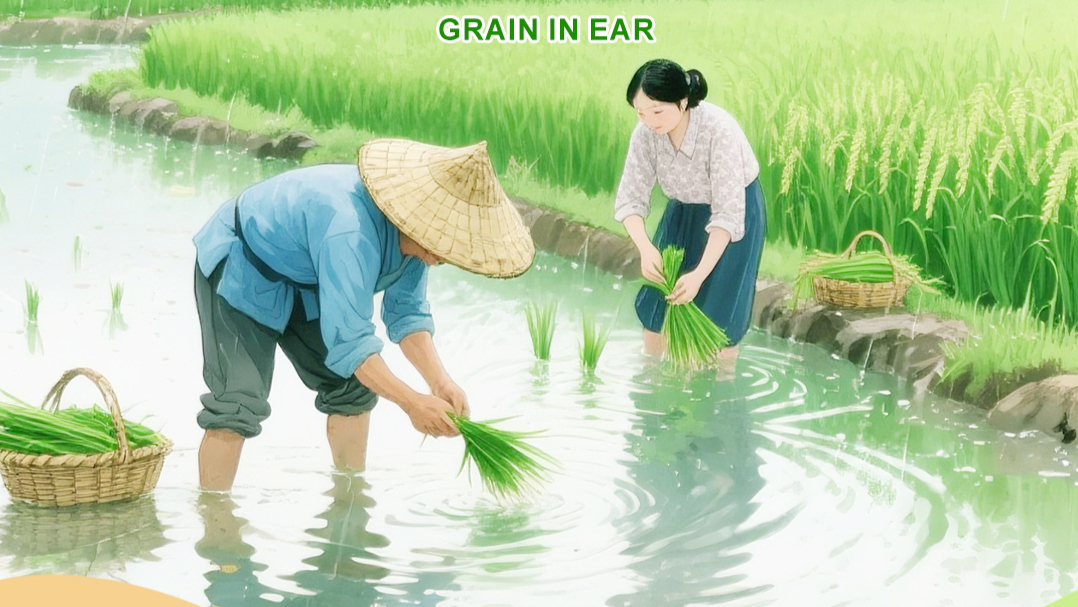
Grain in Ear, is the ninth solar term in the traditional Chinese solar calendar, marking a significant period in the agricultural cycle. This solar term signifies a busy time for farmers across China. The term "Grain in Ear" is particularly indicative of the ripening of crops like barley and wheat, and it heralds the time for intense agricultural activities, including harvesting these grains and sowing seeds for the next crop cycle.
Climate and Weather Patterns
During Grain in Ear, there is a noticeable increase in rainfall, particularly in the middle and lower reaches of the Yangtze River. This period coincides with the onset of the Plum Rains season, characterized by continuous rainy or overcast weather. The term "Plum Rains" derives its name from the simultaneous ripening of plums during this time. The increased precipitation offers ideal conditions for growing rice, vegetables, and fruits.
Cultural Significance and Traditions
The Grain in Ear period has inspired poetry and art, capturing the essence of agricultural life and the dedication of farmers. Renowned Tang Dynasty (618-907) poet Bai Juyi eloquently depicted the bustling farming scene in his poem "Watching the Wheat Harvest," highlighting the industrious spirit of rural communities. Similarly, Song Dynasty (960-1279) poet Lu You chronicled the experiences of southern China’s farmers in his work "Timely Rain," emphasizing the importance of timely rainfall for rice cultivation.
These terms are a crucial aspect of traditional Chinese agriculture and play a vital role in helping farmers determine seasonal activities. Even today, the 24 solar terms, including Grain in Ear, remain integral to cultural practices, influencing various aspects of life such as food, health, and cultural rituals.
One notable traditional practice associated with Grain in Ear is "An Miao", or seedling protection. This activity, originating from the southern Anhui province, dates back to the early Ming Dynasty (1368-1644). During this period, local communities conduct sacrificial ceremonies to pray for bountiful autumn harvests. Participants create various types of bread from wheat flour, using vegetable juice for coloring. These breads are then offered in rituals seeking a good harvest and community safety.
Another traditional activity is the farewell to the Flower Goddess. In ancient China, it was customary to conduct ceremonies, expressing gratitude to the flora and bidding farewell during Grain in Ear. Although this practice has diminished in many regions, it remains documented in classical literature, notably in Cao Xueqin's "A Dream of Red Mansions."
Health Practice
Grain in Ear is also associated with specific dietary guidelines aimed at maintaining health during the hot, humid season. It is advisable to consume fruits and vegetables with a cooling nature, such as balsam pear, tomatoes, cucumbers, eggplants, celery, asparagus, watermelon, and strawberries. Traditional Chinese Medicine suggests these foods help eliminate body heat and assist digestion.
In South China, boiling green plums is a popular practice during this time. Green plums, rich in organic acids and minerals, are believed to offer numerous health benefits, such as blood purification and fatigue reduction. However, due to their acerbic nature, they require boiling before consumption. Article reference1. 24 Solar Terms: 7 things you must know about Grain in Ear. chinadaily.com.cn. 20242. A grain of truth. chinadaily.com.cn. 2022Photo Gallery(9 pictures)CategoriesLifestyleTag24 Solar TermsRelated24 Solar TermsCatalogue1. Overview2. Climate and Weather Patterns3. Cultural Significance and Traditions4. Health Practice- - - []








